On March 6, the Ningdong Photovoltaic Base’s "Lithium Battery + Supercapacitor" Hybrid Energy Storage Key Technology Research and Demonstration Project was successfully connected to the grid. This marks China's first hybrid grid-forming energy storage project.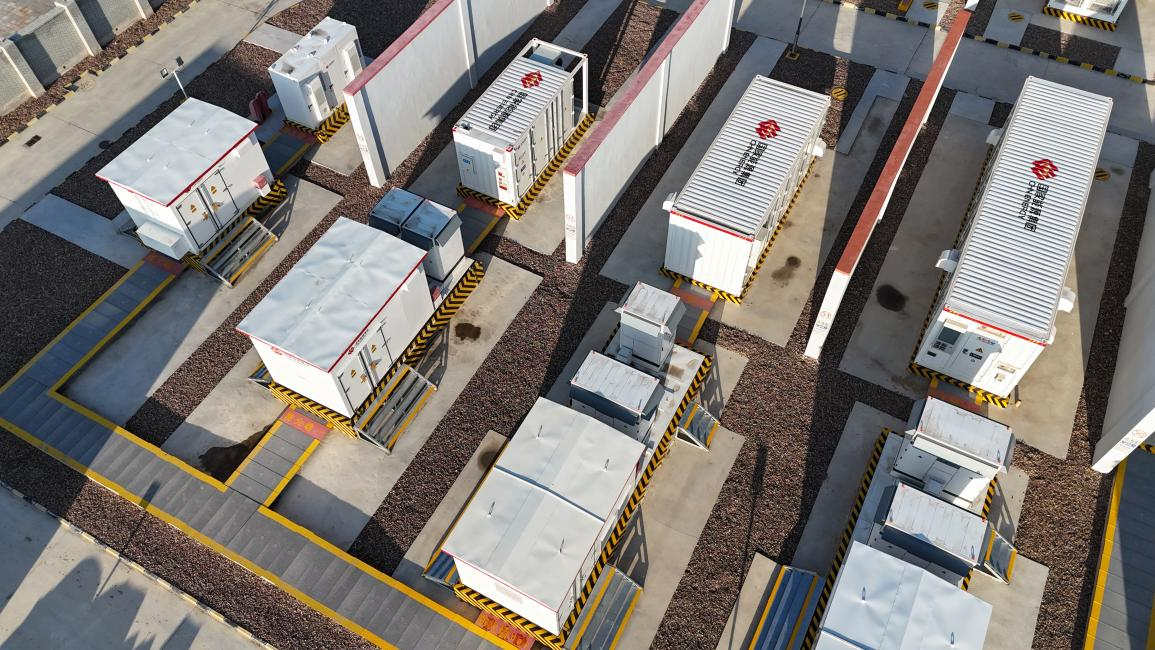
This project is a major 2023 technological breakthrough initiative by China Energy Group, jointly developed by the National Energy New Energy Research Institute and Ningxia Power. Implemented at the Ningxia New Energy Shuguang No.1 Energy Storage Station, the project addresses the urgent need for long-duration, strong-support, and flexible regulation resources in new-type power systems with a high share of renewable energy and high power-electronic penetration. It integrates lithium-ion batteries, supercapacitors, and sodium-ion batteries to conduct research and demonstration on hybrid energy storage technologies across applications such as peak shaving, frequency regulation, and grid-forming.
Tailored for power grids in China’s western renewable energy-rich regions, the project adopts a hybrid grid-forming technology route, focusing on hybrid energy storage configuration and control, low-cost sodium-ion battery integration, energy storage clustering, and grid-forming technologies, with validation through demonstration projects. It has developed a scalable, cost-effective, long-lifespan, and strong-support hybrid grid-forming energy storage model, establishing economic evaluation methods and technical solutions for different grid-forming technology routes. Additionally, it conducted China’s first hybrid grid-forming energy storage short-circuit test, contributing to the group's leadership in grid-forming energy storage technology.
The hybrid energy storage project consists of:
The successful operation of this project enhances the response capability and economic viability of energy storage systems, strengthens regional grid security and stability, and provides theoretical and empirical support for China Energy Group's efforts to enhance renewable energy integration. It also contributes to the planning and construction of large-scale renewable energy bases, such as those in the "Shagehuang" (desert, Gobi, and barren) regions, supporting the development of a new-type power system.




































