April 25, 2025 /eszoneo/ —
The energy storage market in Latin America is experiencing significant growth, driven by increasing demand for renewable energy integration and grid stabilization solutions. The acceleration of energy storage projects is closely tied to the expansion of solar power and the need to mitigate renewable energy curtailment, particularly in regions with high solar generation potential. In Chile, this trend is exemplified by the inauguration of the BESS del Desierto, the first large-scale stand-alone energy storage plant in the region, which underscores the growing role of energy storage in stabilizing and optimizing the electrical grid. The project marks a major milestone in Chile's energy transition, with robust backing from both public policy and private investment.
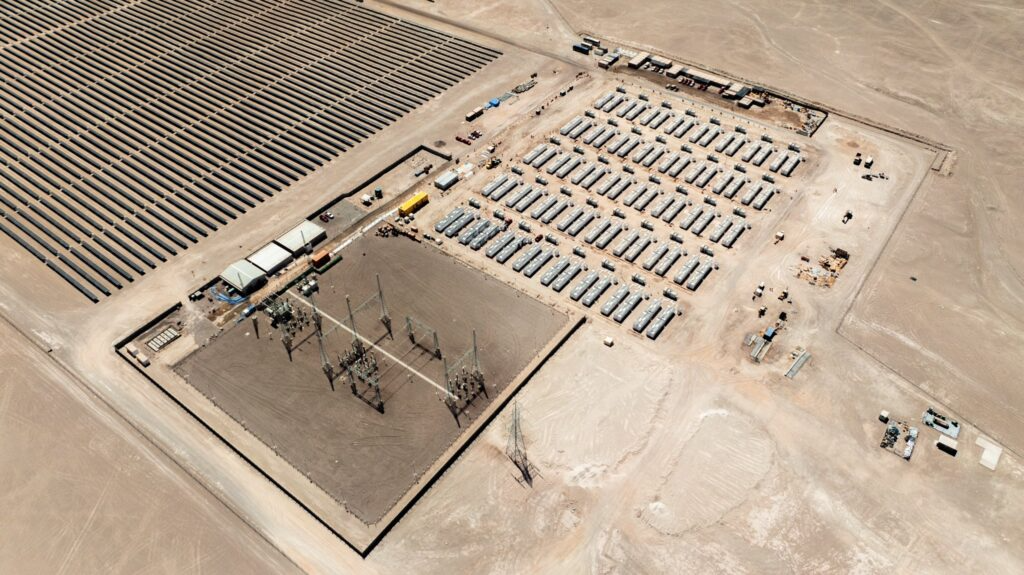
Image: Ministry of Energy of Chile
Atlas Renewable Energy has inaugurated BESS del Desierto in María Elena, Antofagasta Region, marking the launch of the first large-scale stand-alone energy storage system in Latin America, with a 200 MW capacity and 800 MWh of storage.
With the presence of Chile’s Minister of Energy, Diego Pardow, BESS del Desierto was officially opened. This project, developed by Atlas Renewable Energy, is presented as the first large-scale stand-alone energy storage plant in the region.
Located in the Atacama Desert, the plant has an installed capacity of 200 MW and 800 MWh of storage, which is enough, according to a statement, to power approximately 2,500 electric buses for urban public transport, with over 500,000 kilometers of autonomy.
The system consists of 320 batteries spread across more than three hectares, designed to store solar energy during periods of high generation and inject it into the national grid during peak demand hours. It is estimated that the plant will deliver around 280 GWh annually to the grid, potentially helping to reduce renewable energy curtailment in northern Chile caused by transmission constraints.
According to industry data, Chile loses nearly 3,000 GWh of renewable energy per year, with approximately 1,400 GWh attributed to solar energy.
Construction of BESS del Desierto began in 2024, employing workers from the local communities of María Elena, Tocopilla, and Calama, with a peak workforce of 200 people, 25% of whom were women. The project is located on the grounds of the Sol del Desierto photovoltaic plant, which has 244 MWp capacity and has been operational since 2022 in the municipality of María Elena, Tocopilla Province, Antofagasta.
Owned by Atlas, the storage system was financed through a 15-year power purchase agreement (PPA) with EMOAC, a commercial energy subsidiary of COPEC. Part of the stored energy will be used to supply 27 electric terminals and power nearly 2,500 electric buses in Chile’s public transport system.
BESS del Desierto will operate entirely autonomously, not linked to a specific generation plant, allowing flexible energy management and enhancing the stability of the national electrical system. The project incorporates Sungrow's liquid cooling technology, PowerTitan, and advanced control systems to maximize battery efficiency and safety.
SOURCE: pv-magazine-latam.com




































