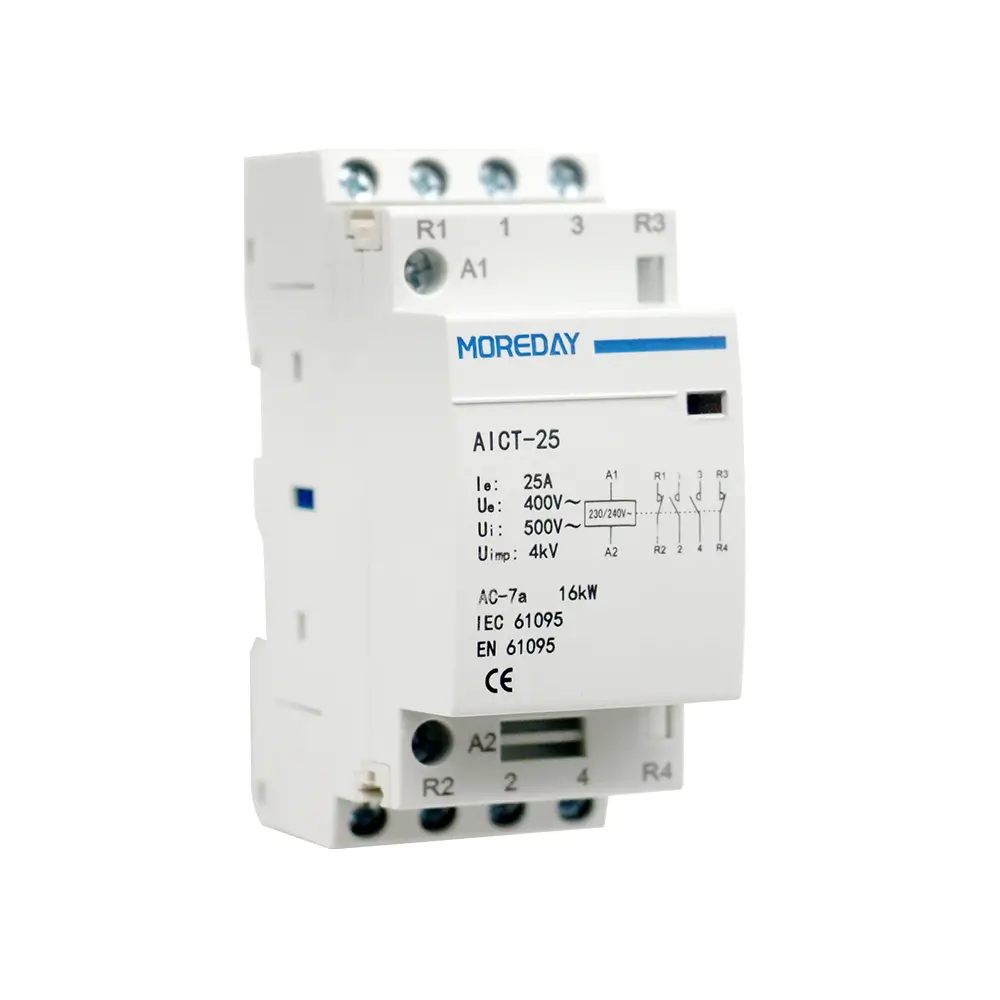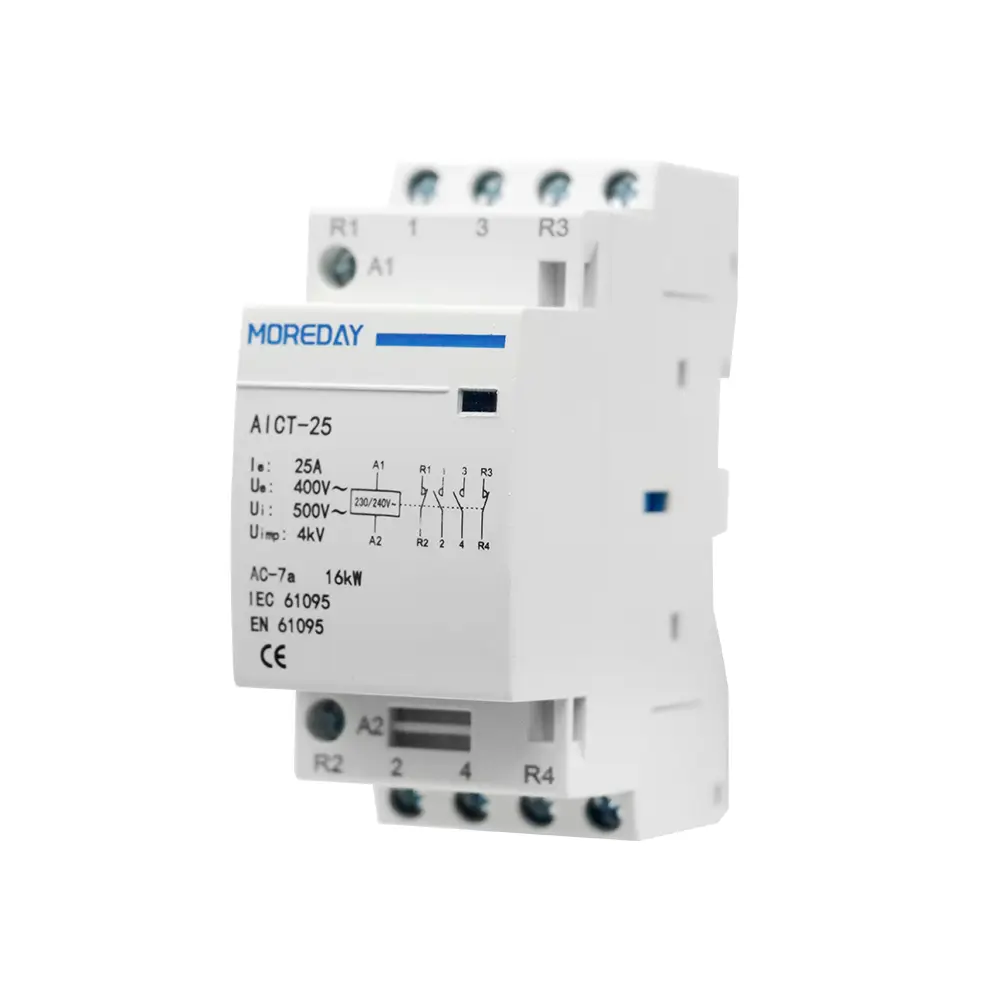



An ac contactor is a type of electrical switch designed to control the flow of electricity to an air conditioning unit, heat pump, or other HVAC equipment. It works by establishing or interrupting an electrical circuit when it receives a signal from the thermostat or other control devices. Simply put, it’s the bridge between your thermostat and your air conditioning system.
An AC contactor consists of several key components, including a coil, contact points, and an armature. The coil generates a magnetic field when energized, attracting the armature and closing the contact points. This allows electricity to flow to the HVAC equipment. When the coil is de-energized, the magnetic field collapses, releasing the armature and opening the contact points, interrupting the flow of electricity.
Contact MOREDAY Today To Get The Best Price On Your Needs.


Space-saving Design
Modular AC contactors have a compact and space-saving design, which makes them ideal for use in residential and commercial settings where space is limited. Their modular construction allows for easy integration with other electrical components, such as circuit breakers and distribution boards.
Safety Features
Many modular AC contactors come with built-in safety features, such as arc extinguishing chambers and overload protection, which help ensure safe and reliable operation. These features can prevent electrical fires, equipment damage, and other potential hazards associated with electrical systems.
Small size and big performance70% smaller in size
Compared with a traditional contactor volume reduction of 70%, it is easy to install. The modular design of these contactors also makes installation and replacement a breeze. Most modular AC contactors are designed to fit easily onto DIN rails, allowing for quick installation and removal when needed.
75% reduction in energy consumption
Energy savings and environmental protection compared with traditional contactors: energy consumption is reduced by 75%.Using a high-quality, properly sized AC contactor can improve the overall efficiency of your HVAC system. A well-functioning contactor ensures that the right amount of electricity is delivered to your air conditioning unit, preventing waste and reducing energy consumption.
A: Some signs that your ac contactor may need to be replaced include the air conditioning unit not turning on, turning on and off rapidly, or the contactor producing a loud buzzing or chattering noise. If you suspect your contactor is faulty, consult a professional technician for diagnosis and replacement.
A: The lifespan of an AC contactor can vary depending on usage and environmental factors. On average, contractors should be replaced every 5-7 years. However, it’s a good idea to inspect and maintain your contactor regularly to help extend its lifespan.
A: While it is possible to replace an ac contactor yourself, it’s recommended that you hire a professional electrician or HVAC technician if you’re not comfortable working with electrical components. Incorrect installation can lead to safety hazards and damage to your HVAC system.
A: While both contactors and relays are types of electrical switches, contactors are designed to handle higher current loads, typically found in HVAC systems and other heavy-duty applications. Relays, on the other hand, are more suitable for lower-current applications, such as controlling lights or small appliances.
A: Yes, a faulty AC contactor can cause your air conditioning unit to run inefficiently, leading to increased energy consumption and higher energy bills. If you notice a sudden spike in your energy costs and suspect that your AC contactor might be the culprit, it’s a good idea to have a professional technician inspect your HVAC system and address any issues.