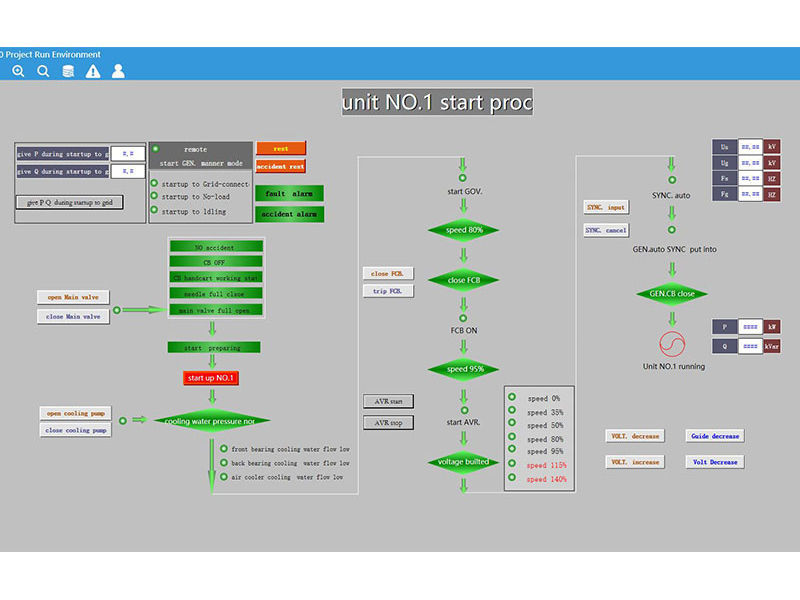


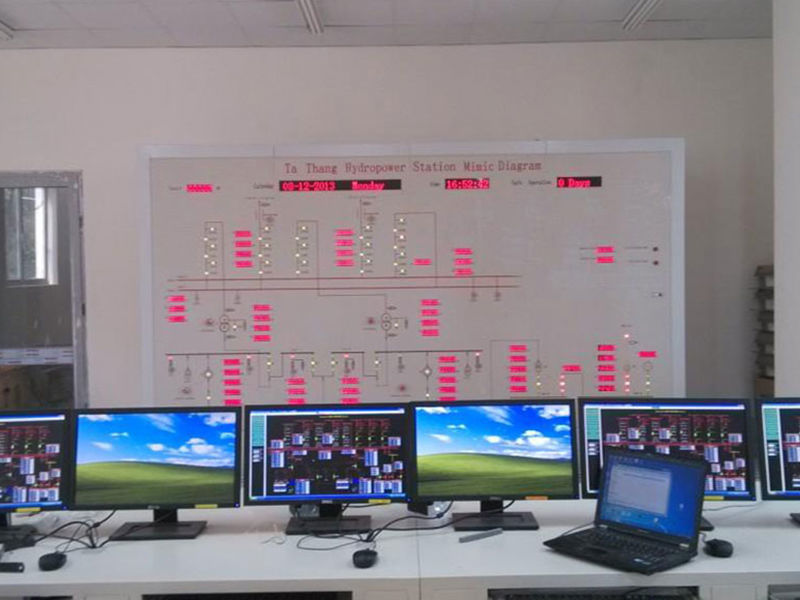


The HZ3000 computer monitoring system is a new generation of background monitoring system that meets the SCADA standard and integrates monitoring and data acquisition It mainly includes three monitoring methods: factory station monitoring remote centralized control and cloud service monitoring with diversified monitoring functions such as real-time data display statistical analysis massive data storage fault diagnosis and early warning
HZ3000 computer monitoring system has been used in hydropower stations substations photovoltaic power stations pumping stations tap water treatment sewage treatment and other fields The main features is that: clear network structure high security performance clear authority division convenient management reserved interface good scalability standard protocol strong compatibility diversified system support for cross-platform
1. Comprehensive Project Management: Based on the latest distributed architecture it offers layered distributed deployment one-click publishing backup and recovery supports multi-network redundancy dual-machine hot standby database redundancy and backup and is compatible and easy to upgrade
2. User-Friendly Graphic Interface: Provides a variety of colorful templates along with a rich set of graphic elements components and images for easy selection and design It also supports various animation effects and custom script writing
3. Open Secondary Development Model: Offers multiple secondary development options including custom control interfaces and script writing
4. 3D Real Scene Interaction: Supports the use of real scene 3D models providing a complete 3D interactive experience
5. Convenient Multilingual Switching: Supports seamless switching between various languages in the configuration and operational interfaces
6. Customizable Operating Environment Interface: Users can adjust menu layouts based on their actual needs to achieve customization
7. Diverse Hardware Driver Support: Supports multiple communication methods including Ethernet and serial ports and various communication protocols such as IEC61850 IEC103 IEC104 and Modbus
8. Diverse Alarm Operations: Adjustable alarm font size and color to relieve operator eye fatigue customizable alarm types and combinations for easier viewing supports user-defined alarm sounds
9. Rich Reporting Functions: Supports importing Excel format reports and displaying data in floating chart formats
10. Rational Permission Management Settings: Supports group management and assigns different permissions to different user groups
11. Deep Integration of Video Surveillance and Data Monitoring: Supports multiple camera connections allowing cameras to interact with alarm information
1. Remote measurement (analog) ≤100000 remote signal (switching) ≤100000
2. Pulse quantity ≤32768 remote control quantity ≤32768 remote adjustment quantity ≤32768
3. Screen call time ≤2s automatic refresh time 1~100s (configurable)
4. Main station alarm push screen time ≤2s
5. Dual machine switching time ≤10s
6. Server CPU load under normal conditions ≤30% during system failure ≤50%
7. Workstation CPU load under normal conditions ≤30% during system failure ≤60%
8. Network load under normal conditions ≤30% during system failure ≤50%
9. System reliability ≥30000 hours (excluding peripherals)
1. Project Management: Manages projects configures network structures publishes projects logs into projects configures communication hot standby multi-machine backup configuration multi-network redundancy configuration and one-click publishing backup and recovery
2. Real-time Data Interaction and Storage: Responsible for the collection storage and display of real-time data from lower-level devices ensuring timely response to a large amount of dynamic real-time data
3. Historical Data Query and Processing: Analyzes and processes data stored in the historical database and presents the processed data visually for enterprise-level data mining
4. System Configuration and Permission Management: Configures set values and alarm parameters in both configuration and operational environments and manages user permissions
5. Driver Configuration and Data Definition: Facilitates communication and data exchange with devices third-party monitoring software and information platforms
6. Screen Configuration and Video Monitoring: Organizes and edits working screens connects data and operations and sets staticdynamic colors while providing a graphical monitoring interface for real-time device status and control
7. Reporting Functions: Creates various data reports and displays report data
8. Remote Diagnosis: Allows remote viewing of real-time message and data information through the network including checking network status CPU and memory usage file version numbers and real-time debugging information
9. SMS Functions: Provides alarm notifications data queries and device control command responses based on SMS modules
10. Script Server and Script Editor: Offers secondary development capabilities users can write specific function scripts through the script editor and the script server will automatically read the corresponding script files to implement the functionality
11. Resource Management: Manages resources used in the monitoring system including viewing uploading and deleting local resources and downloading uploading refreshing deleting and authenticating network resources
12. Forwarding Configuration: Primarily used to forward collected data to third-party systems including dispatch centralized control centers and safety systems
13. Multilingual Conversion Function: Converts text on the current configuration and operational interfaces into the official language of the country where the power station is located